
I broke up with Instagram.
I made a big decision recently, and I'm feeling really good about it. I quit posting on Instagram.
Nothing dramatic. No deleting the account, no angry goodbye post. More of a "Dear Algorithm, I think we should see other people" situation.
I'm stepping away from posting on Instagram. Not because I'm done sharing, but because I'd rather spend my limited time writing things that actually reach you, instead of guessing what a feed wants this week.
If you've ever wondered whether you could stop posting on Instagram for your business and still be okay, this post is for you. I'll walk you through why I made the call, what I did with my Instagram profile instead, and how to tell whether a marketing channel is fueling you or quietly draining you.
Why I stopped posting on Instagram.
Instagram wants short, fast, and constant. Something new every day, or it quietly forgets you exist.
And what I'm discovering about myself (this one surprised me) is that I like the long version. The full thought. The kind of writing you're reading right now.
I've spent so much energy telling women to build a business that fits around their life, not the other way around. It felt silly to keep handing my stolen hours to an app that will never, ever say thank you.
If you're building a business in the margins of a busy life, your time is the most limited resource you have. Social media burnout isn't a personal failing. More often than not, it's a sign that the channel you're feeding doesn't match how you actually work best.

What I did instead: a static 12-post Instagram grid.
If you visit my Instagram now, you'll find exactly 12 posts. That's it. That's the whole feed.
It's less of a feed and more of a landing page. A permanent little map of who I am, how I work, where the free stuff lives, and where to find me now. Since I'm not posting anything new, nothing will push it down. It just sits there, quietly doing its job while I'm over here doing mine.
I chose 12 posts because that's roughly what most people see when they land on a profile from their phone. Four rows of three, read top to bottom like a short letter. Each row answers the next question a visitor has:
Who is this, and why is it quiet here? A post introducing me and my mission, my "Dear Algorithm" breakup letter showing where to find me now..
Can I trust her? A post about my background, The Confident Creators Studio, and The Fair & Square Method in one carousel.
What can I get right now? My free resources, The Stolen Moments Planning Guide, and my Website Clarity Quiz.
How do I go deeper? The story of my struggle with postpartum brain fog, my blog The Index, and a final post that says, "If you've read this far, we're besties."
The breakup post and the besties post both invite people to join my email list. So the grid works like a landing page: it greets people, builds trust, and points them somewhere that I actually show up every week.
The big idea here is simple. Your Instagram profile doesn't have to be a feed that needs fed forever. It can be a static grid that works as a landing page for your business.
Where to find me now.
I didn't disappear. I just moved. Here's where I'm putting my time instead:
My email list, Notes in the Margins. My personal corner of the internet. A weekly note with the real stories, the lessons, and one thing you can actually try that week.
The Index, my blog. The organized, jargon-free guide to building a business in the margins of a busy life. It's where the long version lives.
My website, squarebysarah.com. Everything I offer, all in one calm place.
Pinterest. I'm still happily pinning away there, because people search Pinterest for ideas and come back to them for months.
When it comes to an email list vs social media, the difference is ownership. My email list belongs to me. My blog posts live on my own Squarespace website. No algorithm decides who gets to see them this week.
You have permission to walk away from what drains you.
You're allowed to walk away from the thing that's draining you. Even if everyone says you have to do it.
I KNOW the voice that says "if you stop posting, you'll disappear." I heard it too. But that's a feeling, not a fact.
The best thing you can do for your business, and for yourself, is to work with your energy instead of against it. Pour your time into something that drains you, and burnout isn't a maybe. It's just a matter of when.
So lean into what lights you up. Because if your business is built on the things that wear you down, it will never really feel like yours.
For me, that meant leaving the feed and putting my energy into email, my blog, and my website. For you, it might be something completely different. Either way, you have permission.
How to decide if you should quit a platform: the “would I miss it" test.
Pick the one marketing task that drains you most. Then write down two things:
What it actually gives you. Sales, email sign-ups, real conversations with the people you want to serve.
What it costs you. Hours, energy, that 10pm guilt when you haven't posted yet.
If the second list is longer, you probably have your answer.
Not ready to quit? Make your profile do the heavy lifting.
You don't have to go all the way to a static grid to get some of the benefit. Instagram lets you pin up to three posts to the top of your profile. Use them to tell a stranger three things:
Who you are and who you help
How you help them
Where to go next (your email list, your website, or a free resource)
Then let those pinned posts work for you while you rest.
Frequently asked questions.
Can you grow a business without posting on Instagram?
Yes. Instagram is one way to be found, not the only way. An email list, a blog on your own website, and search-friendly platforms like Pinterest can all bring people to you, and you own the relationship.
What is a static Instagram grid?
A static Instagram grid is a set number of posts, like 9 or 12, that stays the same over time. Instead of a constantly updating feed, it works like a landing page that introduces you, builds trust, and points visitors to your next step.
Should I delete my Instagram account if I stop posting?
Not necessarily. I kept mine. A quiet, well-planned profile still helps people who search for you find their way to your email list and website. Plus you can use the archive function to hide anything that no longer make sense to show.
Is an email list better than social media for a small business?
For many small businesses, an email list is the steadier choice because you own it. Social media can still help people discover you. The best mix is the one you can keep up with, without burning out.
Make the most of the hours that are yours.
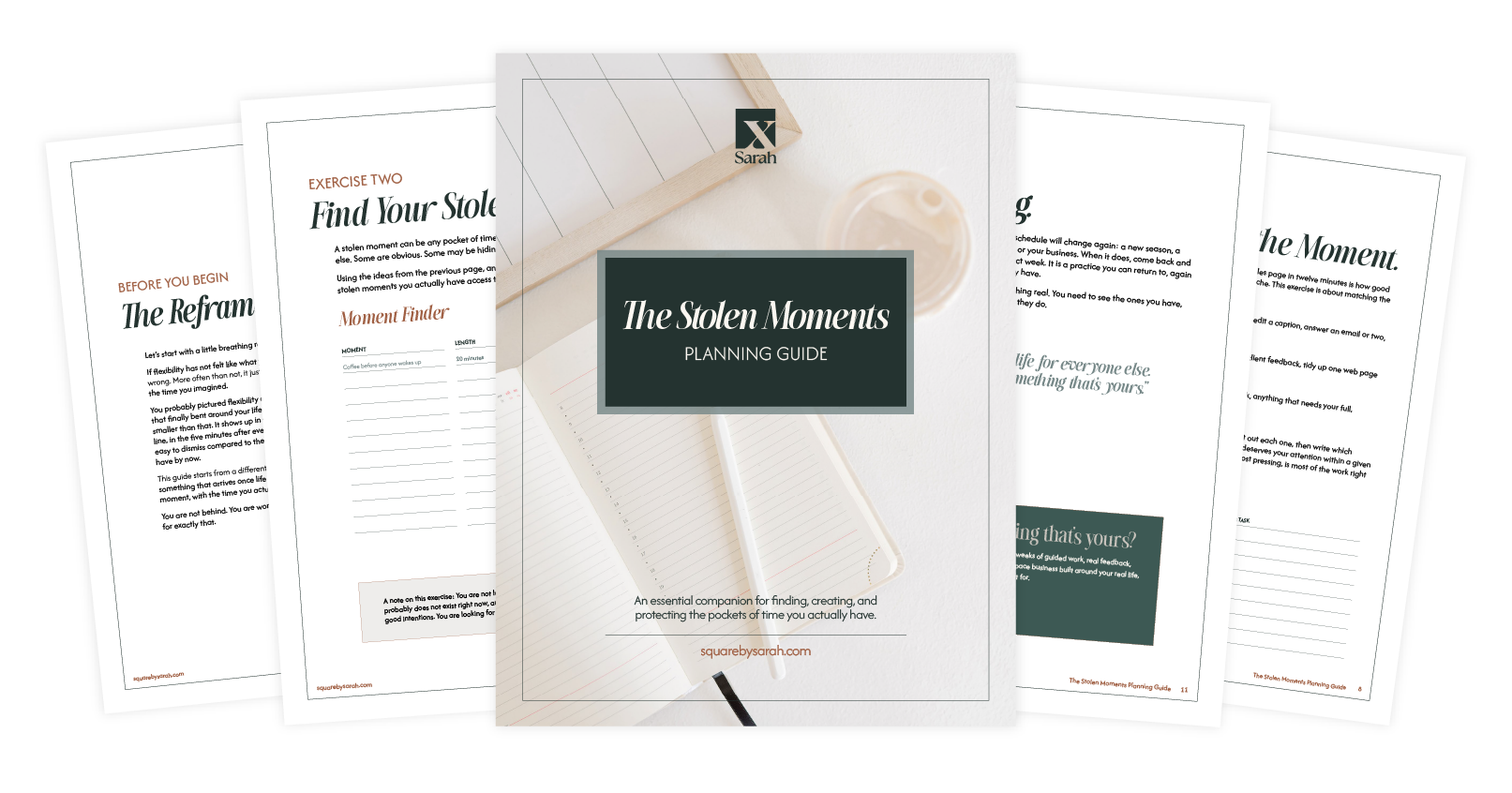
Speaking of stolen hours, let's make the most of the ones you have. The Stolen Moments Planning Guide helps you turn those small pockets of time (nap time, school pickup lines, the quiet after bedtime) into real progress on your business, without burning yourself out to get there.
It's $19, and it's made for the woman building something of her own in the margins of a full life.
Straight to your inbox.
And if you'd like the long version of my stories every week, the kind I used to try squeezing into captions, come join me in Notes in the Margins.
You've built a beautiful life for everyone else. Now it's time to build something that's yours.